Safeguarding Prints, Drawings, Documents
& Other Works on Paper
Paper Conservation for Museums, Collections & Archives
ICA provides paper conservation services for artworks and documents on paper, including drawings, watercolors, prints, maps, manuscripts, letters, and related materials. Based in Cleveland, we serve Ohio and the greater Midwest, with projects completed nationwide. We assess condition, develop treatment plans, and stabilize works for exhibition
or long-term archival preservation.
Common Issues & Treatments
Deacidification, Stain Reduction, Tear Repair & Tape Removal
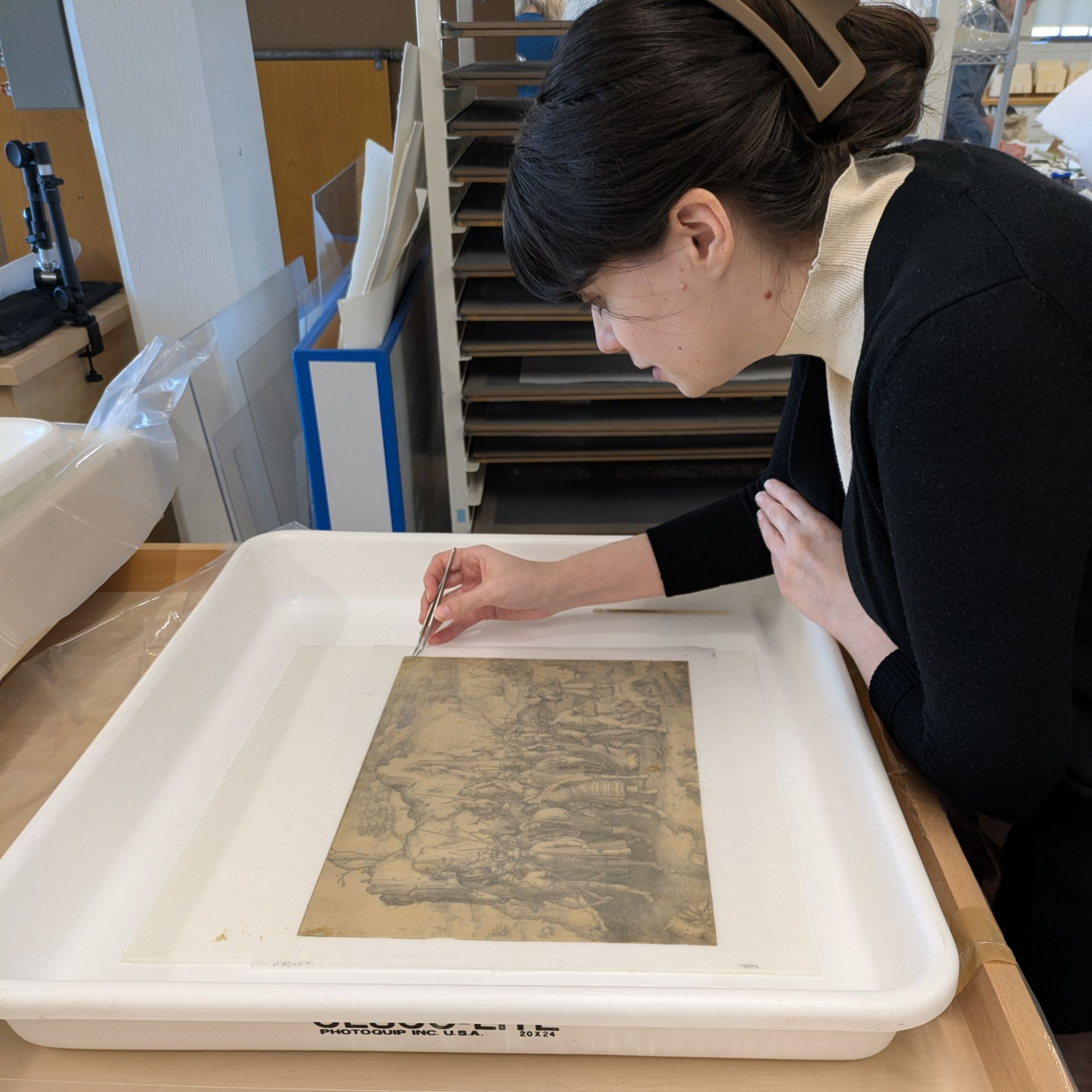
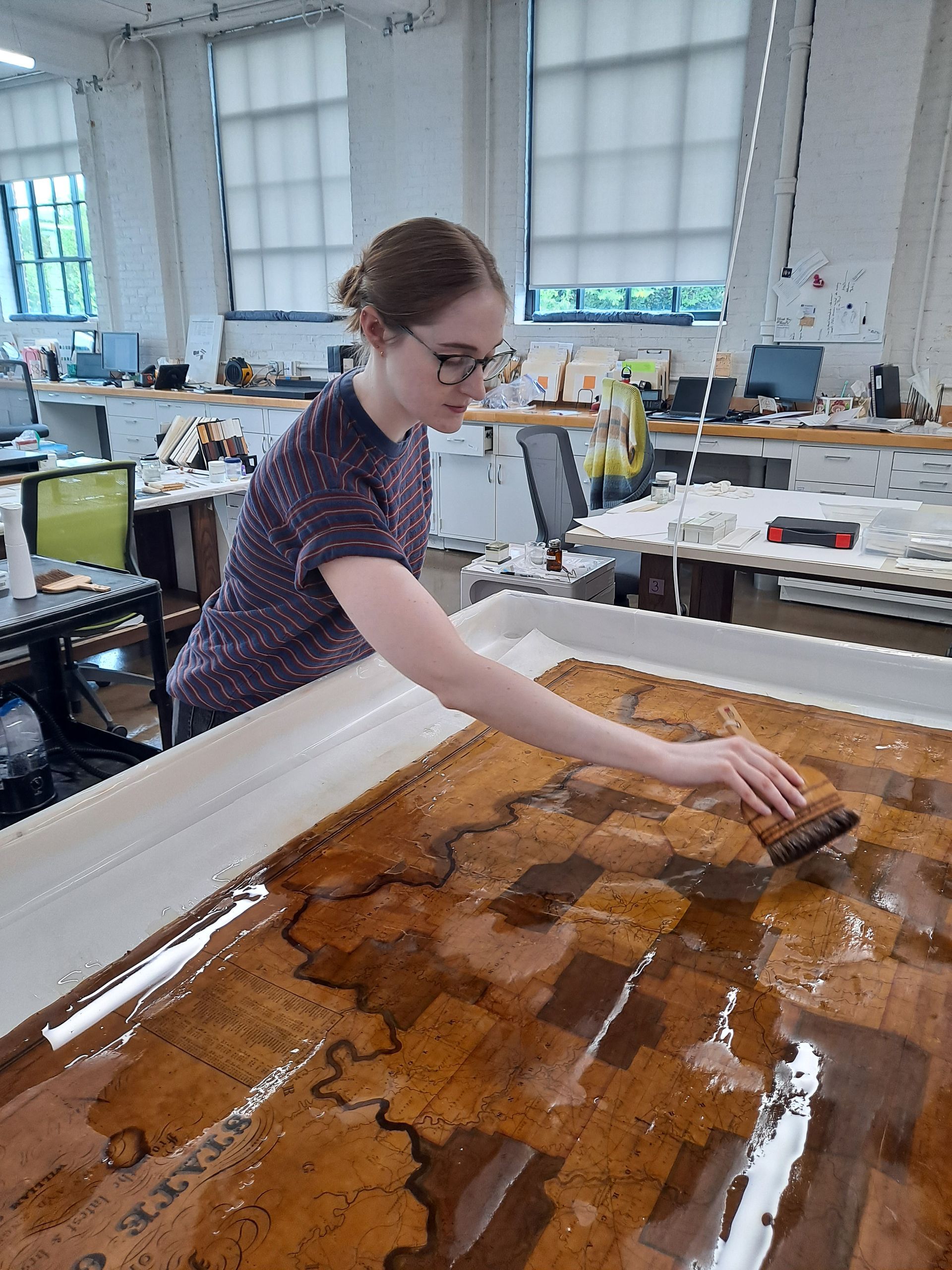
Common condition issues include acidity, staining, tears, creases, mold, and failing tapes or adhesives. Treatment may include deacidification to neutralize acids and introduce an alkaline reserve; stain and foxing reduction; tear repair using thin Japanese tissue and wheat starch paste; controlled removal of pressure-sensitive tapes and adhesives; humidification and flattening under pressure; and gentle surface cleaning. Media testing informs each step to ensure inks, watercolors, charcoal, and other media remain stable and undisturbed.
Items We Treat
Fine Art on Paper & Archival Document Preservation
Works we care for include, but are not limited to:
- Etchings
- Lithographs
- Engravings
- Screenprints
- Pencil and ink drawings
- Watercolors
- Pastels
- Posters
- Maps
- Architectural drawings
- Diplomas
- Certificates
- Diaries
- Correspondence
Our work also supports archival document preservation for libraries and families—housing, sleeving, and rehousing plans that keep collections readable for the long term. Select historical photographs on paper may receive stabilization and storage guidance.
Process & Documentation
Condition Report, Treatment Proposal & Clear Records
Projects begin with an examination and written condition report describing materials, structure, and issues such as acidity, stains, tears, or tape residues. A treatment proposal outlines recommended steps, timeline, and costs. Work is documented with before-and-after photography and guidance for display or storage, providing a lasting record for collections and provenance.
Preventive Care, Framing & Storage
UV Protection, Archival Housing & Safe Display
To keep results lasting, we advise on the use of UV-filter glazing, acid-free mats and backings, hinging with Japanese tissue, and archival housing (sleeves, folders, and boxes). Stable humidity and light levels, limited display durations, and thoughtful framing help protect works on paper in galleries and homes across the North Coast and the wider Midwest.
Project Highlights
Barbara Remington, The Lord of the Rings poster, 1965
Collection of Melanie Russo
Treatment Summary: This oversized poster was produced in conjunction with the first authorized American paperback editions of The Lord of the Rings trilogy (1965–66). Released by Ballantine Books, this version is a continuous design spanning the three volumes. The poster exhibited embrittlement, an 11-inch tear, scattered losses, pegboard punctures, and adhesive migration into the paper support. The red printing ink was identified as highly solvent-sensitive, limiting treatment options, so the focus was stabilization. Degrading tape was reduced where possible to prevent further staining. Tears were aligned and mended from the verso, and areas of loss were infilled. The poster was secured using reversible attachment methods to provide support while minimizing additional stress to the paper.
Client Response: “I brought ICA a 1965 Lord of the Rings poster that had traveled a long road. It began decades ago hanging in an office, then later lived in my brother‘s smoke filled basement, and after he passed, it stayed with me, torn, tattered and marked by time. It had endured years of life and eight years of my grief. To me it wasn’t just paper. It was part of my fellowship. It was my brother. Kate P. didn’t just restore it--she took on a quest. Every rip and fragile edge was mended with care as if she understood she was stewarding something more than art. When I saw it framed and whole again, I was overwhelmed. It felt like something that had passed through shadow had been carried back into the light. What they returned to me, was not simply a poster, but a relic--preserved, steadfast, and enduring. A reminder that even what is torn can be restored, and that love, like legend, outlast the dark.”
- Melanie Russo
American Civil War Discharge Certificate, 1865
Private Client
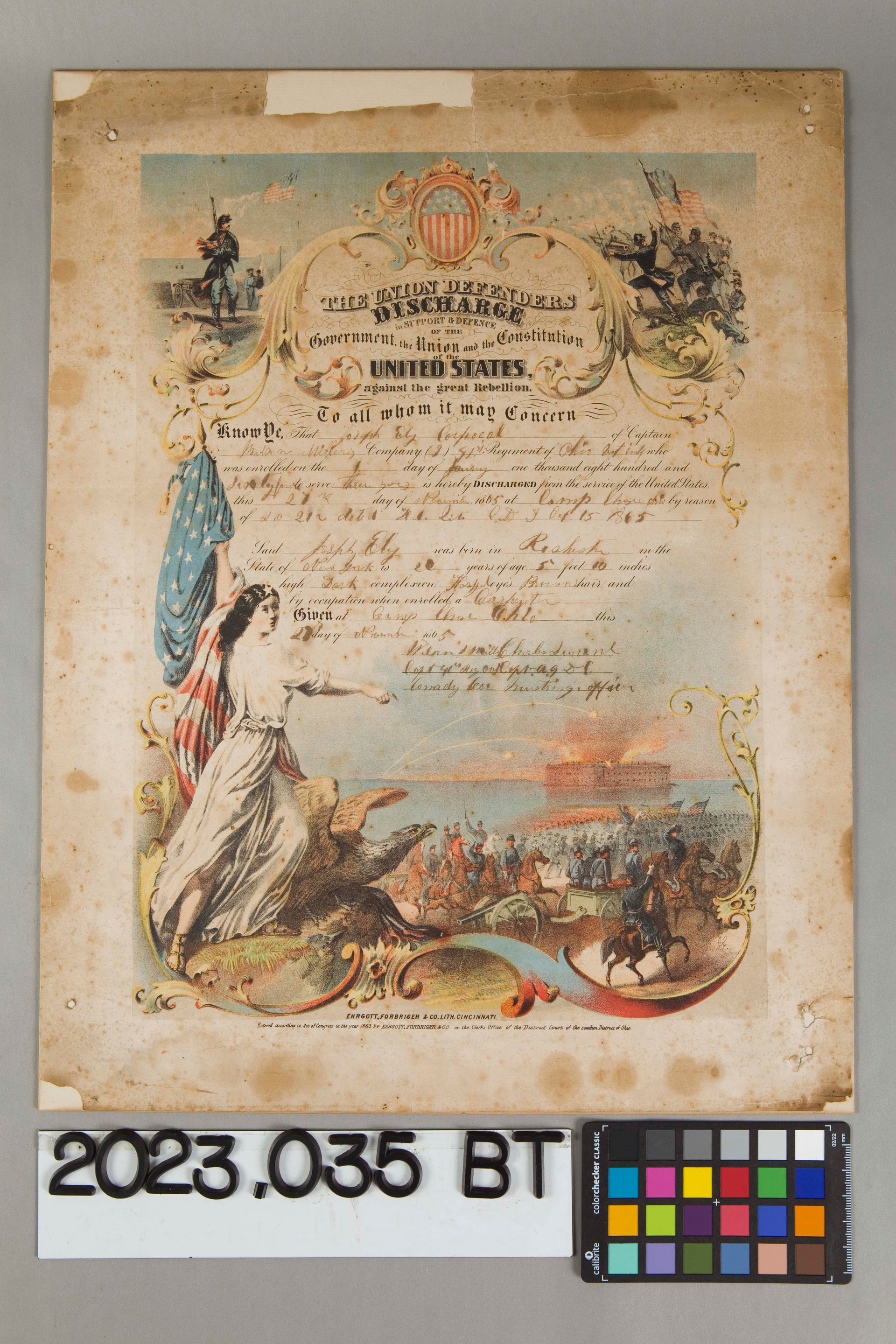
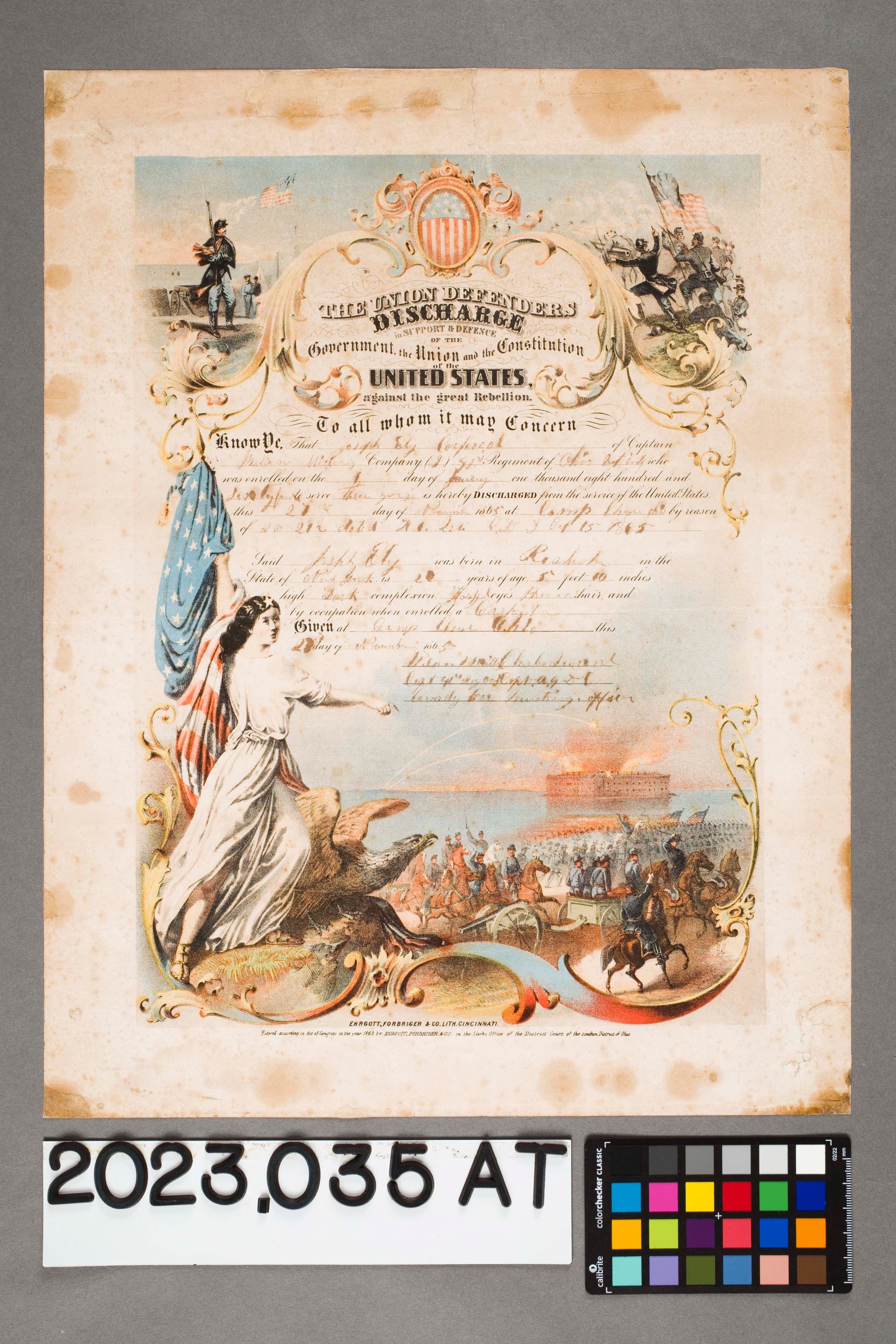
Treatment Summary: This Civil War discharge certificate, a lithograph completed by hand in iron gall ink, exhibited surface soiling, foxing, and damage associated with prior backing. Surface dirt was reduced with a sponge and vinyl eraser, and areas of foxing were carefully diminished under magnification using a scalpel. The problematic backing was gradually removed in layers using a combination of mechanical means and controlled moisture. The document was humidified and washed in deionized, alkalized water to reduce discoloration and improve stability. Losses were infilled with a cotton paper matched to the original and supported overall with a thin Japanese tissue. Infills were toned with watercolor and pastel to integrate with surrounding areas. Treatment improved legibility while preserving the document’s material and historical integrity.
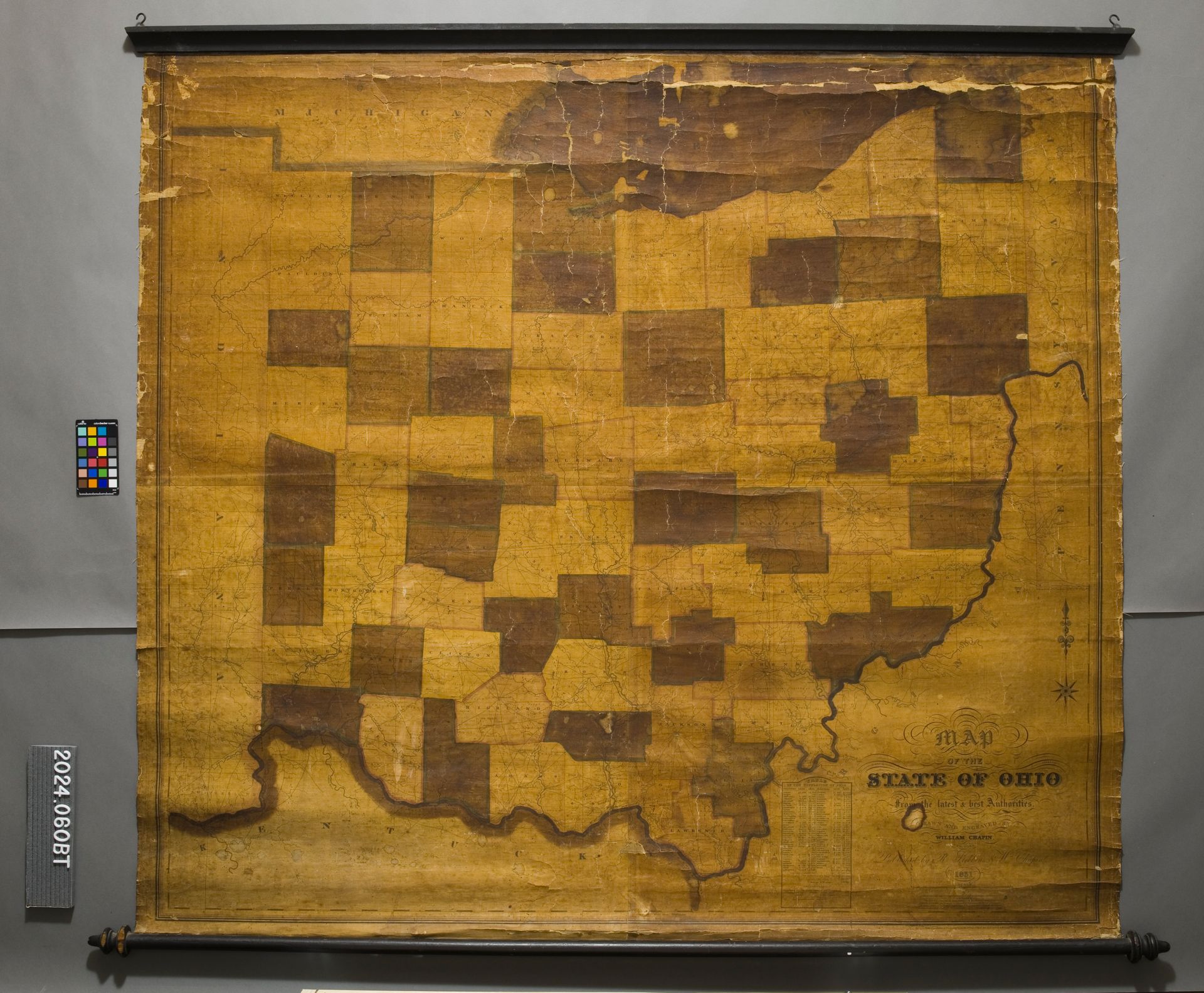
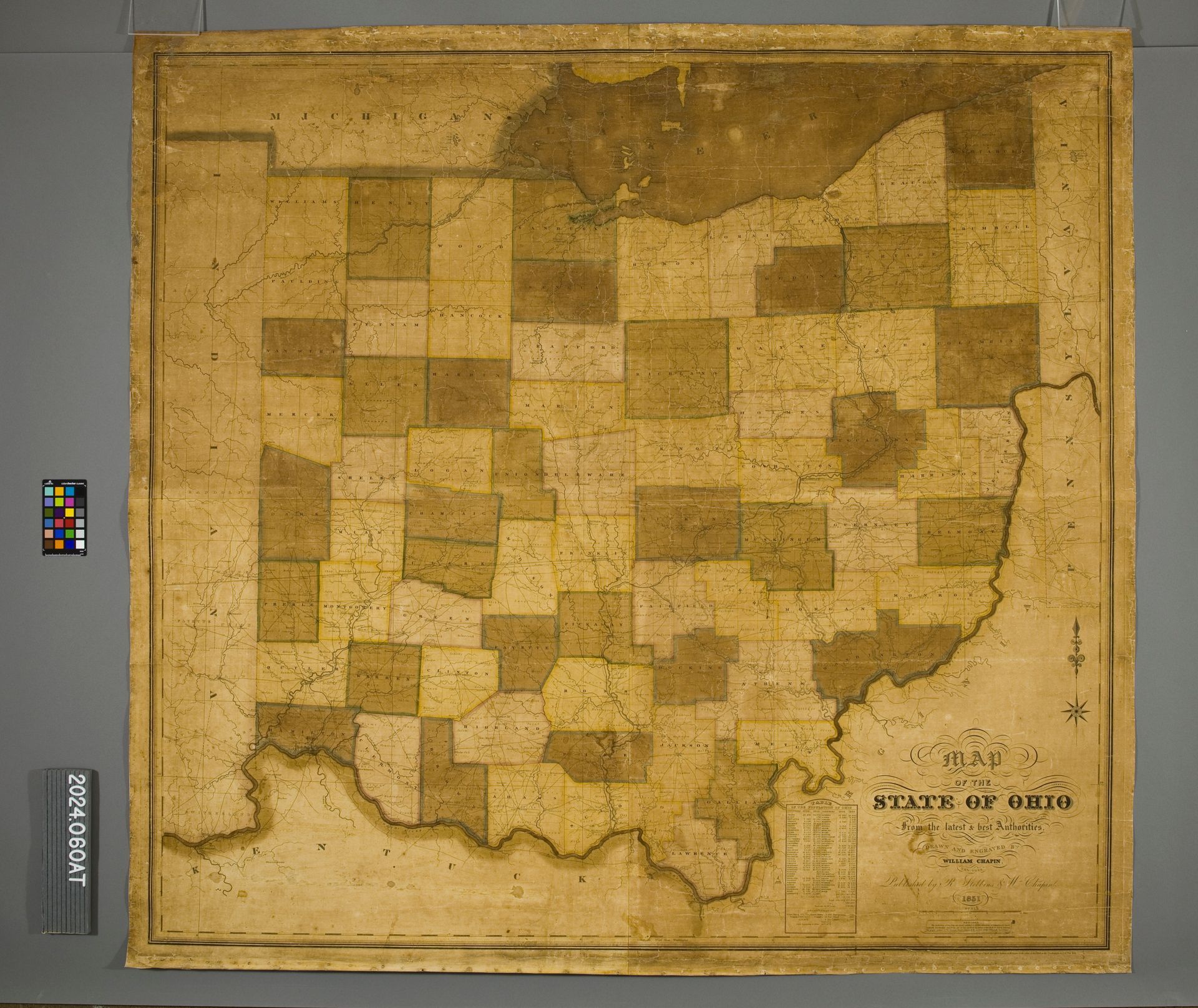
William Chapin, Map of Ohio, 1831
Chagrin History Center
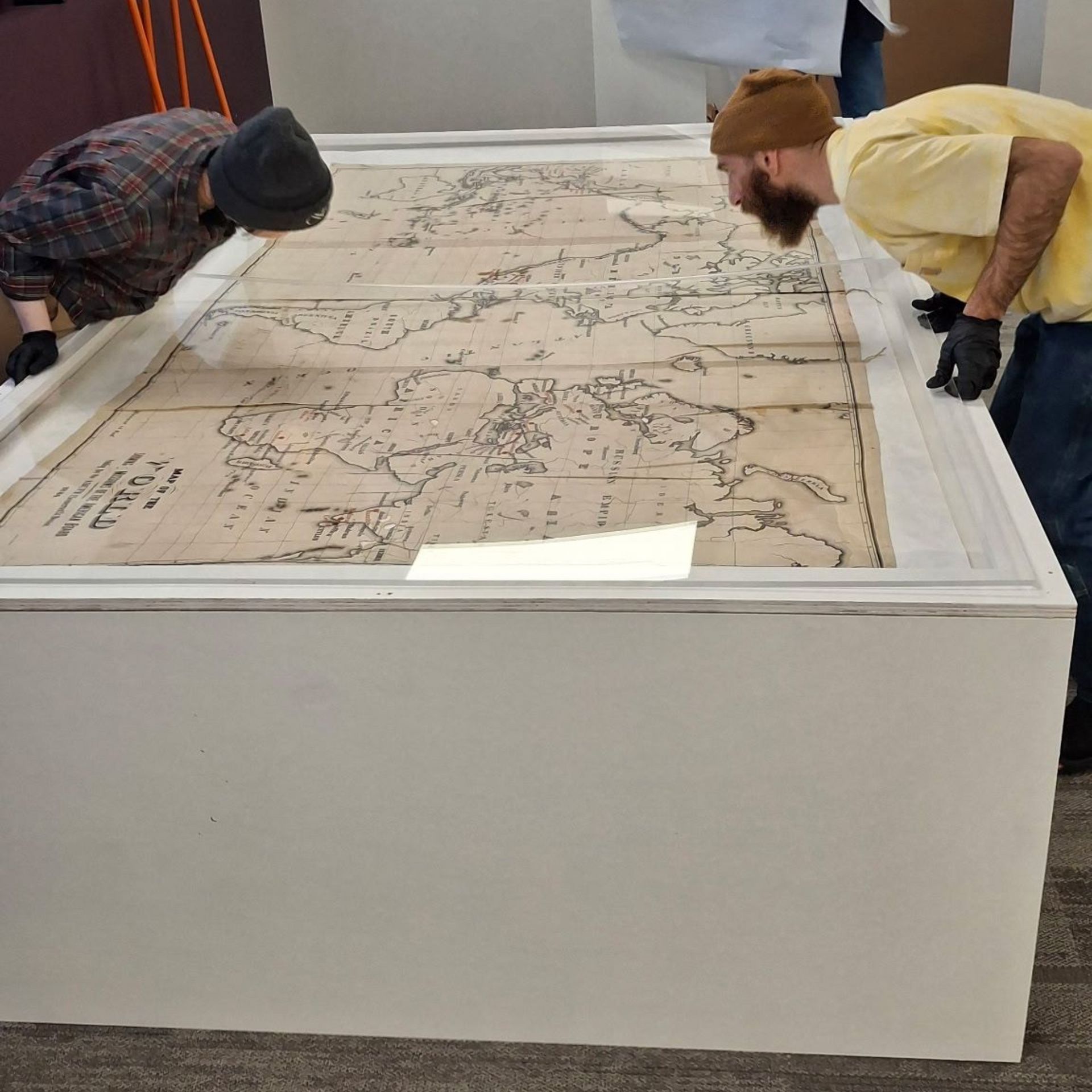
Treatment Summary: This wall map exhibited extensive and complex damage. The top edge had been folded, taped, and tacked to the hanger bar, while older, rusted nails on the bottom roller required careful removal to avoid further harm. Adhesive residues were softened with low-heated air and carefully lifted, and the map was cleaned on both sides using soft brushes, cosmetic sponges, and vinyl erasers. A shallow alkaline wash removed soluble coatings and reduced acidity, while the protein-based adhesive attaching the canvas backing was softened and gently scraped away. After drying, the map was reinforced with multiple layers of Japanese kozo paper using a methylcellulose and wheat starch paste mixture, and tears were mended with kozo fibers. Losses were infilled with toned Western cotton paper and retouched with watercolor and colored pencil to match the map’s original tones.
Regional Reach
Rooted in Cleveland, Serving the Midwest—and Beyond
We support museums, archives, historical societies, universities, and private families across the midwest from Cleveland, Columbus, and Cincinnati to Pittsburgh and Indianapolis. Coordinated shipping and on-site options are available when framed or oversized works cannot travel.
FAQ: Answers to Common Paper Conservation Questions
Can documents be cleaned without inks running?
Often, yes. Media stability tests guide whether washing or localized cleaning is appropriate. If water-sensitive, we use non-aqueous methods that protect the writing or artwork.
What is deacidification and when is it needed?
Deacidification neutralizes acids in paper and can add an alkaline buffer. It’s helpful for brittle, yellowing wood-pulp papers from the 19th–20th centuries and many modern papers.
There’s old tape on my letter—should I remove it myself?
Tape removal at home risks tearing fibers and spreading adhesive stains. Controlled tape removal with suitable solvents and supports is the safer route.
Can foxing or water stains be reduced?
Many stains and foxing spots respond to stain reduction through carefully controlled washing or localized treatments, after media testing confirms safety.
How should I store family papers after treatment?
Use archival housing, acid-free sleeves, folders, and boxes, plus UV protection and moderate humidity. Avoid attics and basements; rotate display to limit light exposure.